
Now Reading: The Major Quantum Computing Breakthroughs in 2024 Explained
-
01
The Major Quantum Computing Breakthroughs in 2024 Explained

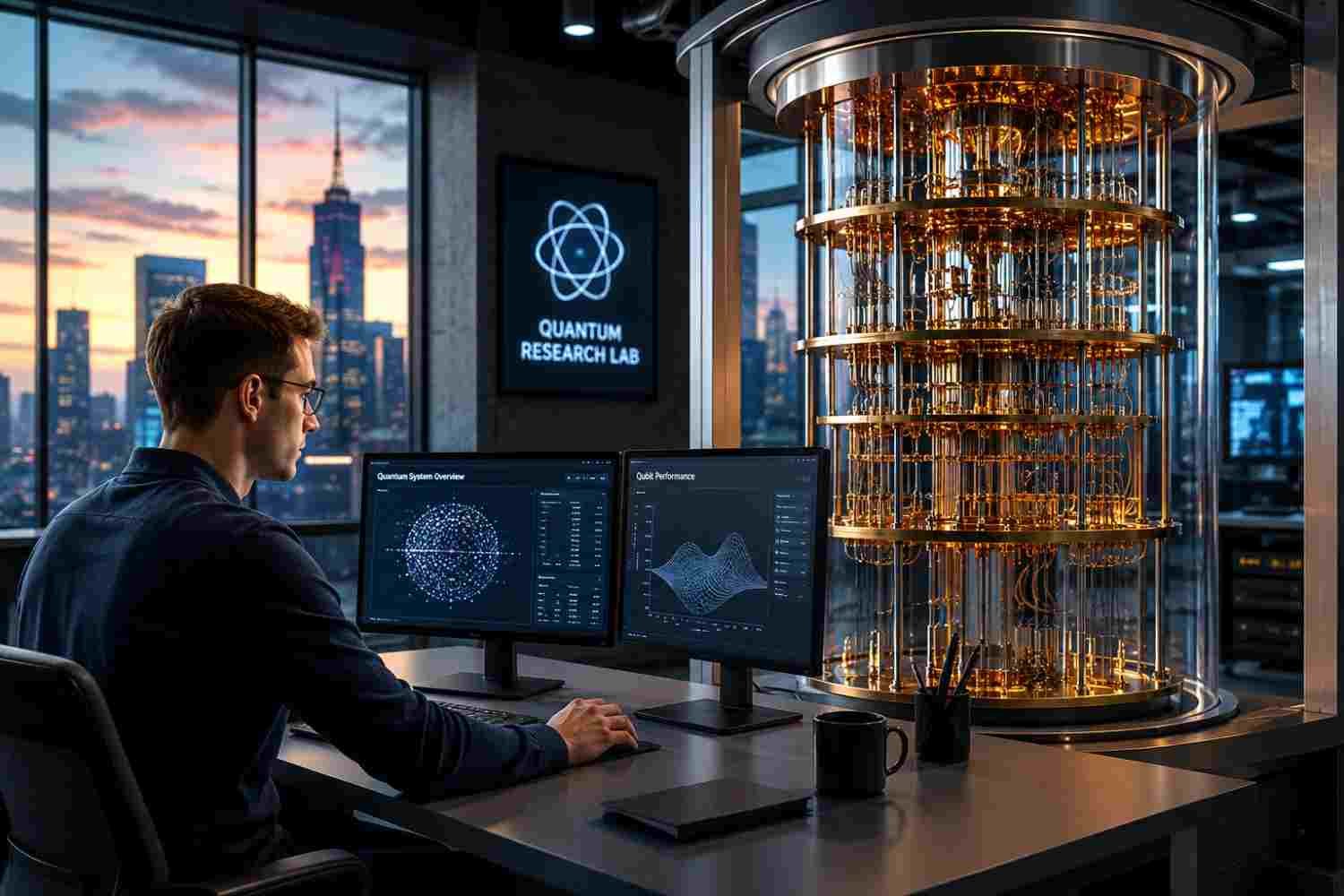
I remember how often quantum computing was discussed as something that might become useful someday. In 2024, that conversation started to feel different. The interesting developments were no longer just about building a processor with more qubits. Researchers were showing better ways to control errors, preserve quantum information, and run deeper calculations. That made the field feel less like a physics experiment and more like an engineering problem that could actually be worked through.
What stood out to me was how many of the year’s important advances were connected. Better hardware meant better error correction. Better error correction made logical qubits more practical. At the same time, new security standards showed that the arrival of powerful quantum machines was already influencing ordinary computing systems. The biggest story of 2024 was not one machine or one record. It was the growing effort to make quantum computing reliable, scalable, and useful.
Why 2024 Was an Important Year for Quantum Computing
Quantum computers use qubits instead of the bits used by conventional computers. A qubit can represent quantum states that allow certain calculations to be approached in fundamentally different ways. The problem is that qubits are extremely sensitive to noise and other disturbances.
That is why simply increasing the number of qubits does not automatically create a better quantum computer. A large system filled with unreliable qubits can still produce unreliable results.
In 2024, much of the serious progress focused on this reliability problem. Hardware teams worked on reducing errors, researchers improved error-correction methods, and software developers continued building tools that could make quantum systems easier to program and test.
A New Approach to Quantum Error Correction
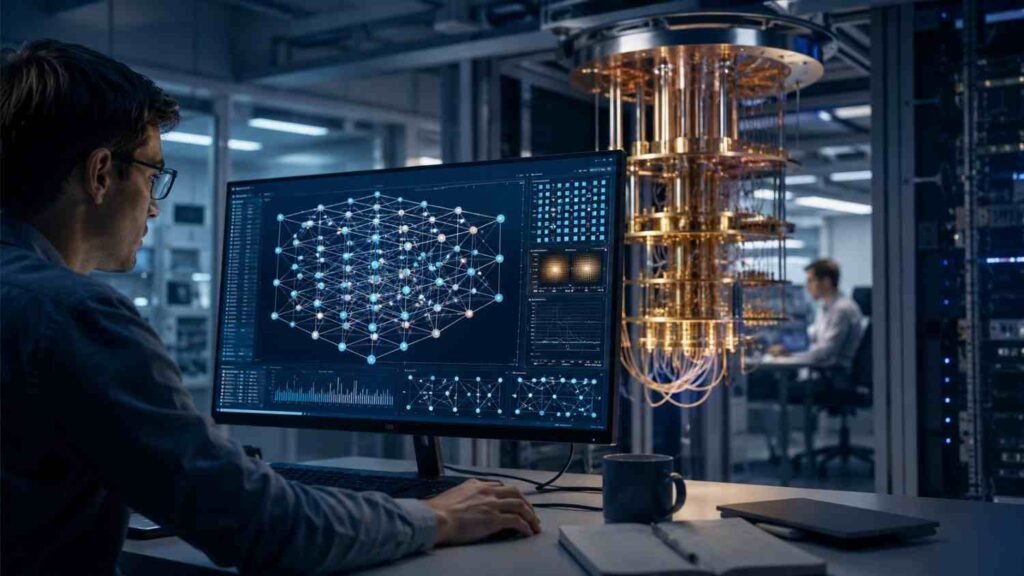
Another major 2024 milestone came from a 105-qubit processor designed to test whether quantum error correction could actually improve as systems became larger.
The results showed a surface-code system operating below the error-correction threshold. In simple terms, this means the error-correction process was beginning to suppress errors effectively enough that increasing the code size improved the lifetime of the stored quantum information rather than making the situation worse. The associated research demonstrated distance-5 and distance-7 surface codes and showed that the larger code could preserve quantum information for more than twice as long as its best individual physical qubit.
This is important because fault-tolerant quantum computing depends on exactly this kind of behavior. A future useful machine will need to perform long calculations without accumulated errors overwhelming the result.
The breakthrough was therefore less about the headline qubit count and more about demonstrating a path toward scaling reliability.
Quantum Processors Also Became Faster and Deeper
Error correction was not the only hardware story in 2024. Processor performance improved in several directions at once.
A 156-qubit superconducting processor reported lower two-qubit gate error rates and a major increase in circuit-layer processing speed. The same year’s work also demonstrated a system capable of accurately running circuits containing up to 5,000 two-qubit gate operations.
That matters because useful quantum algorithms will not consist of one or two simple operations. They will require deeper circuits with many interconnected operations.
This creates a useful way to think about quantum progress: qubit count matters, but so do fidelity, gate speed, connectivity, and circuit depth. A system that can perform a longer calculation reliably can be more valuable than one that simply advertises a larger number of physical qubits.
Quantum Computing Started Moving Into Hybrid Workflows
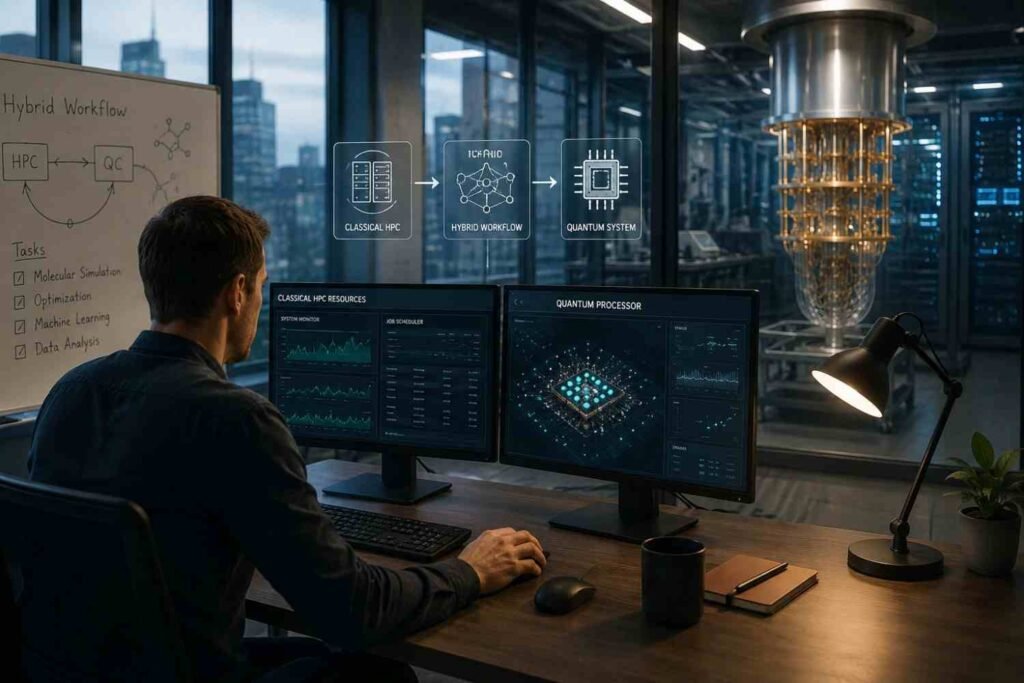
Another notable shift was the growing role of classical computing alongside quantum processors.
In one 2024 demonstration, 12 logical qubits were created and a chemistry workflow combined quantum computation with high-performance computing and an AI model. The calculation estimated the ground-state energy of a catalytic intermediate with chemical accuracy. The demonstration itself did not establish scientific quantum advantage because the result could still be calculated classically, but it showed how quantum, classical, and AI systems can work together in a single workflow.
That distinction is important. Quantum computing does not have to replace conventional computers to be useful. A more realistic future may involve classical systems handling some parts of a problem while quantum processors handle specific calculations where they offer an advantage.
For people researching emerging technology before making decisions about products or services, even something as broad as voozon reviews and customer experiences can illustrate why real-world usability matters alongside technical claims. The same principle applies here: impressive specifications only matter when they translate into something useful.
Quantum Advantage Became More Specific
2024 also produced highly publicized demonstrations of quantum systems performing specialized calculations that would be extraordinarily difficult to reproduce with conventional supercomputers.
The important distinction is that quantum advantage is task-specific. A quantum processor performing exceptionally well on a carefully designed benchmark does not mean it is suddenly faster than a classical computer at everyday workloads.
This nuance matters because quantum computing is still an emerging technology. The useful question is not simply, “Is it faster?” It is, “For which problems can it eventually provide an advantage, and under what conditions?”
That shift toward more precise benchmarks helped move the conversation away from broad claims and toward measurable technical performance.
Security Had to Prepare for Quantum Computers

Perhaps the most practical 2024 development happened outside the quantum processor itself.
In August, the National Institute of Standards and Technology finalized three post-quantum cryptography standards: ML-KEM for key establishment and ML-DSA and SLH-DSA for digital signatures. These standards were designed to protect information against future attacks from sufficiently capable quantum computers.
That is a major milestone because organizations cannot wait until a powerful quantum computer arrives before changing cryptographic systems. Updating security infrastructure can take years.
The move toward post-quantum cryptography shows that quantum computing is already affecting cybersecurity, even while large-scale fault-tolerant quantum machines remain under development.
It also gives businesses another reason to understand emerging technology beyond headlines and specifications. When evaluating new digital services, voozon reviews and customer experiences can be useful for understanding how people respond to technology in practice, just as technical benchmarks help researchers understand quantum systems.
Better Developer Tools Made Quantum Computing More Accessible
Hardware is only part of the equation. Developers also need reliable software tools to experiment with quantum algorithms and connect them to real processors.
During 2024, a stable 1.0 release of a major quantum software development kit became available, while hardware improvements continued alongside it. The same year saw advances in circuit execution, processor performance, and modular hardware research.
Better developer tooling matters because quantum computing needs a broader ecosystem of researchers, engineers, and programmers. Easier access to software can help turn experimental hardware into usable computing platforms.
The next stage of growth will depend on how well those tools connect quantum processors with conventional cloud infrastructure, AI systems, and high-performance computing.
What These Breakthroughs Still Did Not Solve

It would be easy to look at 2024 and assume practical quantum computing had arrived. That would be premature.
Quantum systems still face major challenges involving error rates, scaling, cooling, control systems, connectivity, algorithms, cost, and the number of logical qubits needed for genuinely useful applications.
The breakthroughs of 2024 were important because they addressed pieces of those problems. They did not remove them entirely.
That distinction is worth keeping in mind when reading future announcements. A meaningful advance should be judged by what problem it solves, how reproducible the result is, and whether the improvement can scale.
FAQs: The Major Quantum Computing Breakthroughs in 2024 Explained
1. What was the biggest quantum computing breakthrough in 2024?
Quantum error correction was arguably the most important theme. Demonstrations showed that logical qubits could become significantly more reliable than their underlying physical qubits.
2. What made the 105-qubit processor significant?
Its importance was tied to error correction rather than the number alone. Researchers demonstrated below-threshold surface-code behavior, showing that larger error-correction codes could improve quantum information preservation.
3. Did quantum computers become better than classical computers in 2024?
Not generally. Some systems achieved impressive results on specialized benchmarks, but quantum computers remained unsuitable for most everyday computing tasks.
4. Why were post-quantum encryption standards important?
They give organizations practical methods for preparing existing systems against future quantum-enabled attacks. The standards finalized in 2024 cover both key establishment and digital signatures.
Why 2024 Changed the Direction of Quantum Computing
The most useful way to look back at 2024 is not as the year quantum computers suddenly became mainstream. It was the year several pieces of the engineering puzzle started fitting together. Logical qubits became more reliable, error correction crossed meaningful thresholds, processors handled deeper circuits, hybrid quantum-classical workflows became more concrete, and cybersecurity standards began preparing for a future that may still be years away.
Quantum computing still has a long road ahead. But the focus has become clearer: fewer noisy experiments, more reliable information, deeper computations, and systems that can eventually solve problems worth solving.











Pingback: Blogsternation Com Reviews and User Experiences